

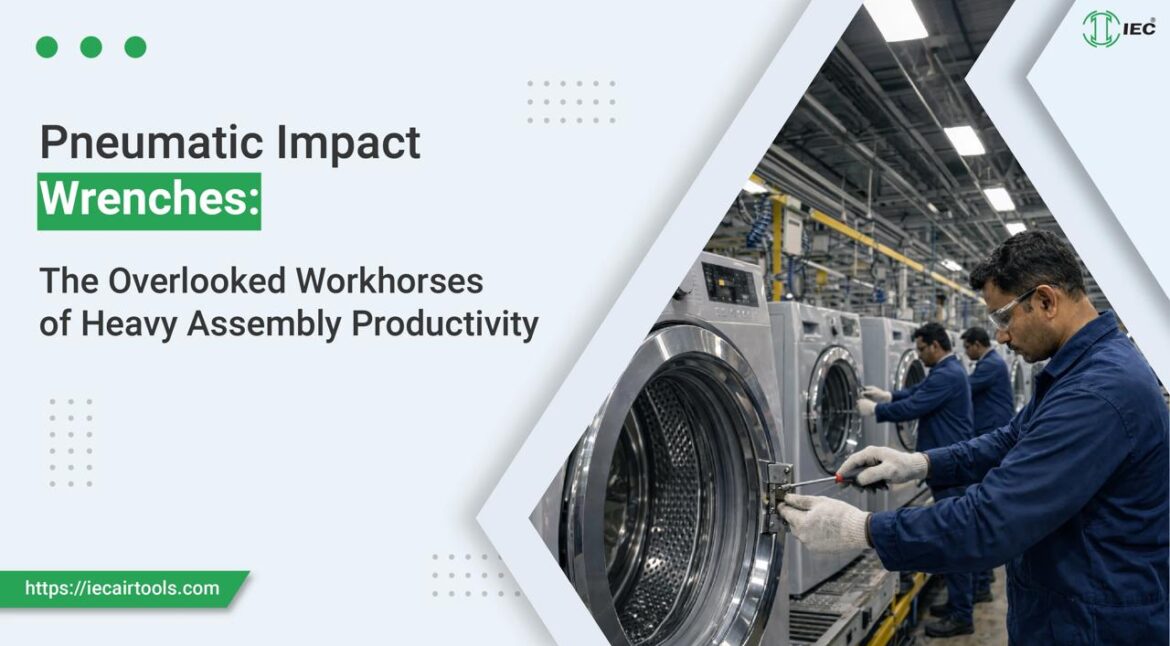
In an era where smart fastening and digital traceability dominate industry conversations, it’s easy to overlook the tools that quietly carry the heaviest workload on the factory floor.
Across automotive, fabrication, and heavy equipment assembly, pneumatic impact wrenches remain central to daily production. Not because they are “legacy tools.” But they support stable output in demanding assembly environments with tight cycle times.
While advanced fastening systems manage precision-critical joints, impact wrenches handle the structural, preparatory, and high-torque tasks that keep components going ahead smoothly and stations balanced.
Where Pneumatic Impact Wrenches Still Dominate Assembly Lines
Impact wrenches operate without torque measurement or traceability features. In assembly environments, they are typically used for high-torque fastening and fast rundown. This allows heavy work to be completed efficiently, without introducing the overhead of controlled fastening systems.
Typical assembly applications include:
- Frame and chassis pre-assembly
- Structural sub-assemblies
- Heavy brackets and mounts
- Maintenance and rework stations
- Fabrication and fixture fastening
In these environments, productivity is often constrained not by data capture but by how smoothly tools perform over long shifts. This is where pneumatic impact wrenches continue to earn their place.
Torque Output and Tool Weight in Heavy Assembly
One of the defining advantages of pneumatic impact technology is the power-to-weight ratio. Compressed air allows impact wrenches to deliver high peak torque without the mass and heat buildup associated with electric alternatives. For operators handling repetitive fastening on large fasteners, this translates into:
- Faster rundown
- Less physical strain
- Reduced tool fatigue over long cycles
IEC’s + Series Light Weight Impact Wrenches are designed with lightweight construction and ergonomic features to support prolonged use and reduce operator fatigue. At the same time, they deliver the high torque output expected from pneumatic impact wrenches.
Consistent Performance in Demanding Assembly Conditions
Assembly environments are rarely ideal. Dust, oil mist, temperature variation, and long duty cycles place constant stress on tools. Pneumatic systems remain popular in heavy assembly because they are:
- More tolerant of environmental variation
- Easier to maintain over long service lives
In production environments that prioritise reliable fastening over added control features, pneumatic impact wrenches deliver predictable performance without the need for complex electronics or calibration routines. This reliability is one reason they continue to coexist alongside pulse-based and transducerised fastening systems rather than being replaced by them.
Tool Ergonomics and Operator Consistency
Ergonomics in assembly is often framed as a safety conversation, but it is just as much a productivity issue. Poorly balanced or overly heavy tools introduce:
- Inconsistent operator speed
- Increased fatigue late in shifts
- Higher variation between operators
Modern pneumatic impact wrenches address this through:
- Optimized center-of-gravity design
- Reduced vibration transmission
- Compact housings for confined assemblies
When operators can maintain a consistent pace without compensating for tool strain, cycle stability improves naturally.
Impact Wrenches as Part of a Complete Pneumatic Ecosystem
In most factories, impact wrenches are not competing with controlled fastening tools; they are supporting them. A typical line structure looks like:
- Impact wrenches for structural or preparatory fastening
- Pulse or controlled tools for quality-critical joints
- Manual or support tools for finishing and adjustments
Treating pneumatic impact wrenches as part of this broader pneumatic ecosystem allows manufacturers to:
- Reserve advanced tools where they add value
- Avoid over-engineering low-risk joints
- Maintain throughput without compromising quality intent
The result is a more balanced, cost-effective assembly strategy.
Built for the Work That Keeps Lines Moving
As assembly systems evolve, pneumatic impact wrenches continue to play a critical role where power-to-weight ratio, durability, and operator consistency matter most. Used intentionally alongside controlled fastening tools, they help manufacturers protect throughput without adding unnecessary complexity.

