Fastening Systems Evolve with Assembly Requirements. Assembly lines are built using multiple fastening technologies, each selected based on the role it plays within the process. As manufacturing environments become more complex, requirements around process visibility, traceability, and controlled fastening are becoming more prominent. At the same time, not every fastening…
In high-volume manufacturing environments, fastening operations occur thousands of times during a single production shift. While traditional fastening systems focus on achieving a specified torque value, manufacturers are increasingly focusing on precise torque control combined with fastening traceability to better understand how fastening processes behave over time. By capturing tightening…
In today’s manufacturing environment, speed alone is no longer enough. OEMs and Tier suppliers are under constant pressure to improve quality, reduce rework, and prevent fastening errors before they happen. For many production teams, this has created a gap between traditional air tools and fully transducerised systems. Filling that gap…
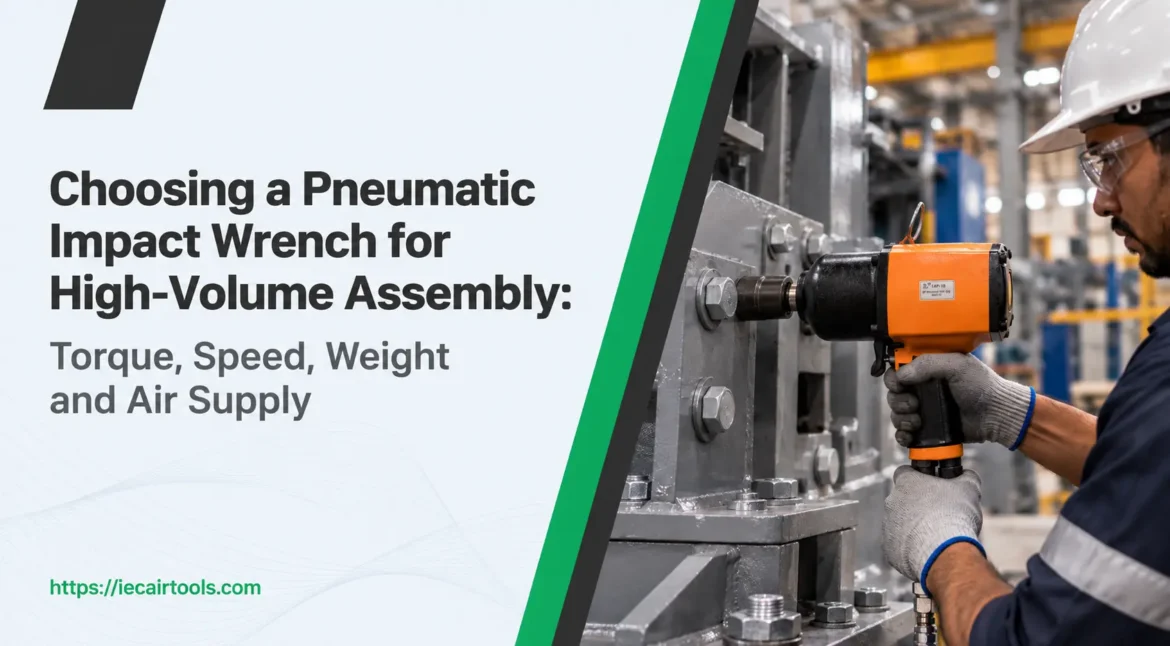
In an era where smart fastening and digital traceability dominate industry conversations, it’s easy to overlook the tools that quietly carry the heaviest workload on the factory floor. Across automotive, fabrication, and heavy equipment assembly, pneumatic impact wrenches remain central to daily production. Not because they are “legacy tools.” But…
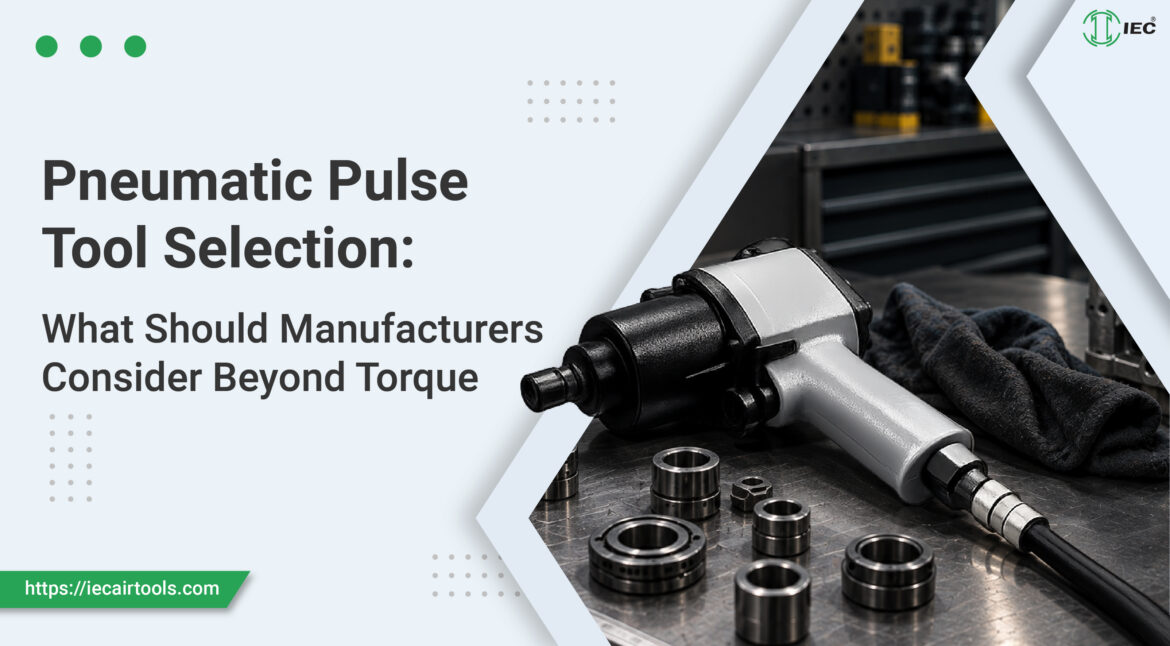
High-throughput assembly environments place competing demands on fastening systems. Production volumes continue to rise, while quality requirements leave less room for variation. In this context, pneumatic pulse tools remain widely used across automotive and industrial assembly lines due to their speed, robustness, and operator comfort. At the same time, increasing…
Fastening has always been crucial in automotive assembly, but on EV platforms, the margin for error is even smaller. Joints inside battery packs, BIW structures, chassis assemblies, and powertrain systems are carrying higher loads and tighter tolerances than before. When a fastener is under-torqued, over-torqued, or incorrectly seated, the issue…
Across OEM and component manufacturing lines, fastening remains one of the most repetitive and time-sensitive tasks. Operators often adapt their technique to keep pace with production targets, but without consistent checks or feedback, small variations in how tools are used can build up over time. These variations in trigger timing,…
If you run an assembly line, you already know this truth: a loose bolt is never just a minor error. It is rework, stoppage, scrap, warranty risk, and a hole in your OEE that compounds across shifts. In automotive alone, an unplanned line stop can cost about 2.3 million dollars…
Over five decades of working alongside Indian manufacturers have taught IEC a simple mantra: supplying a tool is not the same as taking responsibility for its performance. From the earliest pneumatic tools we manufactured in-house to the advanced Industry 5.0-ready systems we support today, every fastening solution we have introduced…
When you first pick up an IEC pneumatic fastening tool, whether it’s a high speed drill, an Accura ST Plus pulse wrench, or an impact wrench, the power, balance, and accuracy are immediately apparent. But what happens during hour four, hour six, or on day two of a week-long assembly…